Categories
Tools

Pin Anything to Windows Taskbar

Pin folders, files, or custom URLs to the Windows 10/11 taskbar effortlessly.

⬇️ Download Taskbar Pin Hijacker

Version 1.0 (Portable ZIP) • Platform: Windows 10 / 11

What It Does

Modern versions of Windows explicitly prevent you from programmatically pinning folders, websites, or custom link arguments to your taskbar. Taskbar Pin Hijacker uses a clever bypass trick: it takes a standard, officially pinned app shortcut (such as Notepad or Command Prompt) and silently redirects its underlying configuration to launch whatever target you specify, applying your custom icons and arguments instantly.

⚠️ IMPORTANT: You must run this application as a Standard User (do NOT select “Run as Administrator”). Windows isolates elevated administrator processes, which prevents the app from locating your standard user profile’s taskbar pins or interacting with the Explorer shell.

How to Use It

  1. Pin Command Prompt to your taskbar.
  2. Launch the downloaded PinAnythingToTaskBar.exe (without admin rights).
  3. Drag & drop a file, folder, or URL directly into the drop zone (or select it manually).
  4. Choose a custom icon:
    • Choose a file (uses the first icon from any .exe, .ico, or .dll).
    • Choose from system icons (opens the native Windows icon selector).
    • Use target default (uses the native file type or folder symbol).
  5. Click ⚡ Hijack Pinned Shortcut.

Your taskbar icon will immediately update and launch your custom target whenever clicked!
Categories
Cheats and Scripts Tools

FOE tool

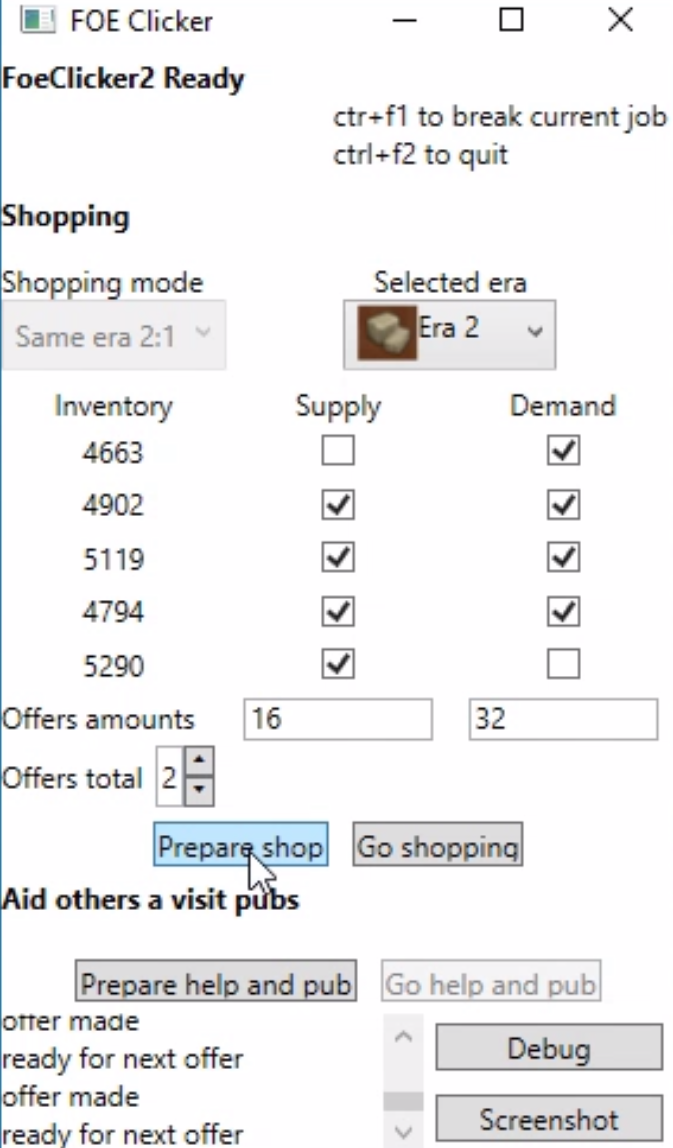
I made a tool for the game Forge of Empires that makes boring clicking for you. Check out the tool on this page:

Categories
Programming Tools

Anti-ransomware script solution

The idea behind this is simple- if we find out files are being changed quickly, we can still make steps to save much of valuable data from ransomware infection.

That’s why we create a “honeypot” with files likely to be encrypted by ransomware. On windows those have following extensions: doc, docx, jpg, png, xls, xlsx and txt. These files are made with a random content and placed to easily reachable places (meaning not buried deeply in directory structure). Also a ransomware usually goes through the file system structure in alphabetical order, so c:\afile\ would be likely to hit sooner than c:\wrong\dang\files\honeypot\something.

Anyway, now we have the honeypot files, we need to watch over them and as soon as they are changed send alert, disconnect network to prevent further infection or shutdown the computer.

We can solve this completely within a windows batch file with windows utilities involved (certutil.exe for generating md5 hashes and fc.exe for comparing them). A simple task in windows task scheduler runs the .bat in short intervals making the job done.

If you are interested, I am willing to explain more or even sell the code along with documentation.

I have also such application written in C# which runs in background- so no need to use task scheduler- so the emergency action happens immediately when files are enrypted.